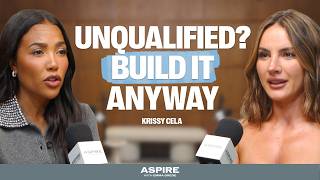
In this interview, Oner Active founder Krissy Cela shares her journey from waitressing and compiling workout PDFs on a student laptop to building a bootstrapped activewear brand generating over two hundred million dollars in annual revenue. Cela discusses the challenges of early business partnerships, the importance of cycle-based female product design, the transition to a global brand presence, and the necessity of assertive leadership and operational structure for company scalability.
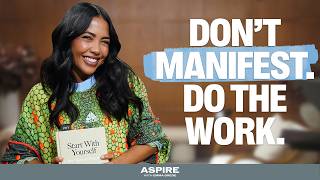
Krissy Cela is the co-founder and Creative Director of Oner Active, a high-growth women's activewear brand launched in 2020. Born in Albania and raised in the United Kingdom, Cela leveraged her massive fitness community to transition from posting workout PDFs to building a bootstrapped business generating over two hundred million dollars in annual revenue. Now based in the United States, she is also the author of Start with Yourself.
August 18, 2026
I was going through significant personal and family trauma. Coming from an Albanian household, women did not historically have a voice and were expected to marry, cook, and clean. The gym was the first place where I felt I had absolute control over my own body and mind, which laid the foundation for my entrepreneurial journey.
I started posting workout videos during university to make my ex-boyfriend jealous after he cheated on me. I was also waitressing thirty hours a week to pay my bills. Over time, I grew a community of three hundred thousand followers before I stopped waitressing, and I did not make my first brand deal until reaching six hundred thousand followers.
The website went live with a countdown, and we generated nine thousand pounds in a single hour. It was life-changing money. I immediately called my mother in excitement, and she told me to keep my feet on the ground because it was just the start. Her advice kept me from stopping or getting complacent.
I launched my app EvolveYou without a formal contract in place. When the contract was finalized five months later, it stated that I owned the fitness content but did not own the coding infrastructure or the database. It was a massive mistake that taught me never to start any project without clear ownership terms on paper.
When we had to migrate EvolveYou to a new server, the app was down for a month and we lost ten thousand subscribers. I give myself exactly twenty-four hours to panic and have a breakdown. After that, I accept the situation, focus on problem-solving, and rely on my childhood resilience to find a solution.
My family moved to the United Kingdom in the back of a truck when I was four, facing immense financial and cultural hardships. Growing up around physical abuse and instability taught me that there is no safety net. For me, there was no option but to survive, which fueled my drive to win in business.
I hate the term family in business. In a family, you accept bad behavior and turn a blind eye to failures. A business is a team built on a financial transaction. We have a duty to perform. If an employee is not delivering what we agreed on, they are not your family, and treating them as such hurts the company.
I had worked with my partners for eight years as an influencer on their athlete roster. I pitched them an activewear brand built specifically for women who strength train. I demanded fifty percent ownership of the business and utilized their existing logistics infrastructure to incubate the brand.
We set up the business under Austrian law during the pandemic because my partners had built businesses that way before. However, Austrian governance includes complex clauses that make equity distribution difficult. It created unnecessary complexities for global investors who prefer UK or US corporate structures.
I set every price myself because pricing is a game-changer that brands often ignore. I refuse to charge women one hundred dollars for leggings. I engineer the products backwards from a target retail price, ensuring high quality remains accessible without forcing customers to spend excessive amounts of money.
You cannot run a community-based business if you do not put the community first. I check TikTok and Instagram alerts daily to keep my finger on the pulse of customer satisfaction and disappointment. I want to understand their direct experiences with our product, which is something I cannot outsource to anyone else.
I never wanted to be the CEO because it is not a creative role. I am brilliant at product design and branding, not day-to-day operations. I mentored under Zach for two years before appointing him. Having a professional CEO allows me to focus on creative direction while he manages strategic scaling.
The United Kingdom does not support entrepreneurs. There is a culture of tall poppy syndrome where people want to pull you down. In contrast, America pushes you to win big, and the press, peers, and market are much more abundant and open. Moving to America allowed me to be far ballsier in my ambitions.
People-pleasing is a plague that damages your brand. Early in my career, I allowed my team to run a campaign because I was worried about looking too controlling, and it was a complete failure. You cannot people-please and be a leader. You must be assertive, transparent, and firm to protect your business.
Use this interview in your research, article, or academic work

Founder & Group CEO at Discovery Group
In this interview, Discovery Group founder and CEO Adrian Gore discusses the behavioral economics behind his shared-value insurance model. Gore outlines the four principles of…

Founder & Executive Chairperson at Biocon
In this interview, Biocon founder and executive chairperson Kiran Mazumdar-Shaw discusses the pioneering of India's biotechnology sector, from launching an enzyme startup to building a…
Co-Founder & CEO at Chapter
In this interview, Chapter co-founder and CEO Cobi Blumenfeld-Gantz discusses the company's rise to a $3 billion valuation in the senior health navigation market. He…

Founder & CEO at Tomorrow.bio
In this interview, Emil Kendziora discusses the future of cryopreservation, longevity science, and the pursuit of life extension. He explains why he views cryostasis as…

CEO at Oscar Health
In this interview, Oscar Health CEO Mark Bertolini explains how technology, AI, and consumer choice can reshape the health insurance industry. He discusses the future…

Co-Founder at Y Combinator
In this interview, Y Combinator co-founder Paul Graham reflects on twenty-one years of startup acceleration and forty-seven YC batches. Graham explores the nature of founder…