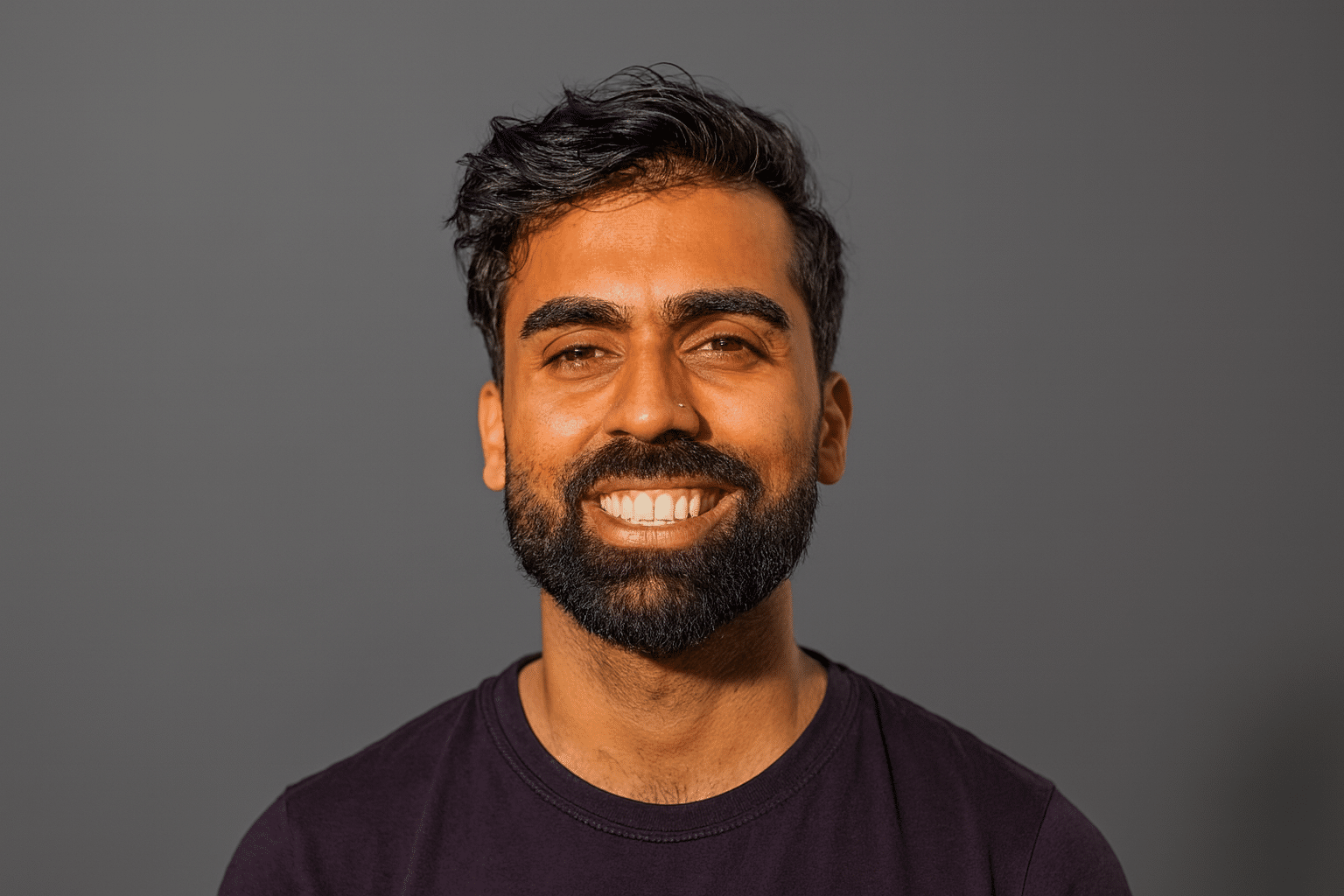
In this interview, Deepak Shukla discusses how he bootstrapped Pearl Lemon from a small startup into a global remote-first agency group. He shares how embracing discomfort, uncertainty, and ambitious challenges helped shape his entrepreneurial mindset. Shukla also explains why hiring, training, and developing exceptional people are the foundations of sustainable growth, and how building high-performance remote teams can create a significant competitive advantage.
Deepak Shukla is the founder and CEO of Pearl Lemon Group, a collection of remote-first businesses spanning digital marketing, lead generation, recruitment, and business services. Before becoming an entrepreneur, he worked as a consultant at Deloitte and pursued a range of demanding personal challenges, including Muay Thai competition and endurance events. Today, he leads a globally distributed team and focuses on people development, operational excellence, and entrepreneurial growth.
December 10, 2025
For me, the biggest block in business is emotional, not logical. Most people know on paper what they should do, but fear of the unknown stops them. So I deliberately do things that stretch me a bit. When you get familiar with that feeling, you move faster, make bolder decisions, and business grows quicker.
In my 20s I was backpacking, fighting Muay Thai, doing licensed fights in Brazil, getting into ultramarathons, even applying to the British special forces. All of that built a high tolerance for risk and failure. When you have been punched in the face and still get up, sending a pitch email or starting a company feels less scary.
I studied English literature, went into Deloitte as a management consultant and hated it. Leaving that safe path showed me two things. First, a fancy career does not guarantee you will feel alive. Second, you can reset your life in your 20s, travel, experiment, and still come back later to build something meaningful that fits you better.
I turned 30, had a bit of a crisis and thought, “Right, I want something more rooted.” I knew I was halfway decent at marketing and I enjoy talking to people, so I just said, “Let’s give this marketing thing a go.” I started from my mum’s place, treating it like a hustle, and two or three years later I was still going.
For a long time I was basically a highly paid consultant. Always on calls, overstretched, stuck inside delivery. The tough part was learning to step back, build a team, and let go of doing everything myself. That transition took a couple more years and was probably the hardest phase, but it is what turned Pearl Lemon into an actual business.
Our DNA is in lead generation because that is what we were good at from day one. If you can reliably generate leads for yourself and for clients, it opens doors. That ability then let us move into other things like an accountancy practice, a legal practice, catering and so on. Lead generation was the engine that powered all the other experiments.
Once you solve acquisition, the main problem becomes people. In big firms they call it the war for talent, and I feel the same. In services it is all about humans. Even in software, it is still engineers, product managers, great operators. The better the people, the easier life gets and the more you can do with fewer, stronger team members.
I do not really believe in résumés anymore. People can write anything on a CV, and it does not tell you how they actually work. I care more about functional testing. Can you do the tasks we need? That is why we use forms and tests: real work samples, Loom videos, following instructions. That reveals far more than a résumé.
Paperform became central to how we work. HR lives inside it, filtering hundreds of applications, checking who followed instructions, who added attachments or Loom videos. Then we use it for onboarding clients, collecting legal documents, getting bank PDFs for accountancy. It probably saves us around 20 hours a week across the business, which is a serious amount of time and money.
Because integration cost is real. If a tool is hard to understand, the hidden cost in training and rollout is huge. With Paperform, I could get it in under two minutes. My team can make a form on the fly. A good tool should fade into the background and not steal brainpower from the real job you are trying to do.
People like to talk about processes, but the world is so fluid that processes keep changing. In my experience, your process lives and dies by the quality of your people. Someone really good does not need a huge process. You can just say, “Go out and promote this,” and they will figure it out. So I always prioritize great people first.
I say I have high risk tolerance, but I am also risk averse in a smart way. I never bet the house. I break a few eggs, but I still have 50 eggs in the bank. I like the idea of one-way doors versus two-way doors. Most decisions are actually reversible, so you can move faster without destroying yourself if something goes wrong.
I would say, prepare properly but stop overthinking it. Watch some tutorials, research, set the campaign up carefully. Then remember it is only $100. You probably spend that on a night out with friends. You will learn more from actually running that campaign than from sitting there worrying about it for three months and doing nothing at all.
Things like a 200 mile ultramarathon or a Muay Thai fight teach you to lean into discomfort. You start with “Ah, screw it, why not? Can’t be that hard,” then you realise it is harder than you thought. But you also learn you can survive more than you imagined. That same muscle helps you tackle scary projects and decisions in business.
Reading books like Good to Great and Built to Last made me think about building something bigger and lasting. Then I heard the idea that you need a vision big enough that other people’s visions can fit inside it. That clicked. If you want truly great people around you, you need a goal big enough to excite them as well.
I asked, based on everything I do, which path could most realistically get to a billion. The answer was that a marketing agency probably will not, because there are very few examples. But home services like cleaning and repairs looked stronger. So we launched a cleaning company in London. We already have clients and we are winning a couple a week.
Most of my time now is with HR and people. That is the biggest lever. HR spends their days in Paperform, reviewing applicants, building forms, improving our hiring funnel. I focus on getting better humans into the company and giving them space. If you solve the talent problem, almost everything else in the business gets easier and more scalable.
![London's leading SEO founder shares the business hacks he uses [FULL INTERVIEW]](https://img.youtube.com/vi/PB_7s3DYP8o/mqdefault.jpg)
Use this interview in your research, article, or academic work

Co-Founder at Y Combinator
In this interview, Y Combinator co-founder Paul Graham reflects on twenty-one years of startup acceleration and forty-seven YC batches. Graham explores the nature of founder…

Founder & CEO at Food for Education
In this interview, Food for Education founder and CEO Wawira Njiru reflects on her foundational upbringing, family values, and the journey of building Africa's largest…

President & CEO at Sasol
In this interview, Sasol president and CEO Simon Baloyi discusses the operational turnaround of the global integrated chemicals and energy company. Baloyi details cross-functional collaboration…

Founder & CEO at Liquid
In this interview, Liquid founder and CEO Franklin Wang discusses the integration of conversational AI with cryptocurrency perpetual futures trading. Wang details how the Co-Invest…

Co-Founder, Chairman & CIO at Marshall Wace
In this interview, Marshall Wace co-founder and chairman Sir Paul Marshall discusses running a ninety billion USD alternative asset management firm. Marshall explains the synergy…

Co-Founder & CEO at Ather Energy
In this interview, Ather Energy co-founder and CEO Tarun Mehta discusses the evolution of India's electric two-wheeler market and the unveiling of the EL platform…