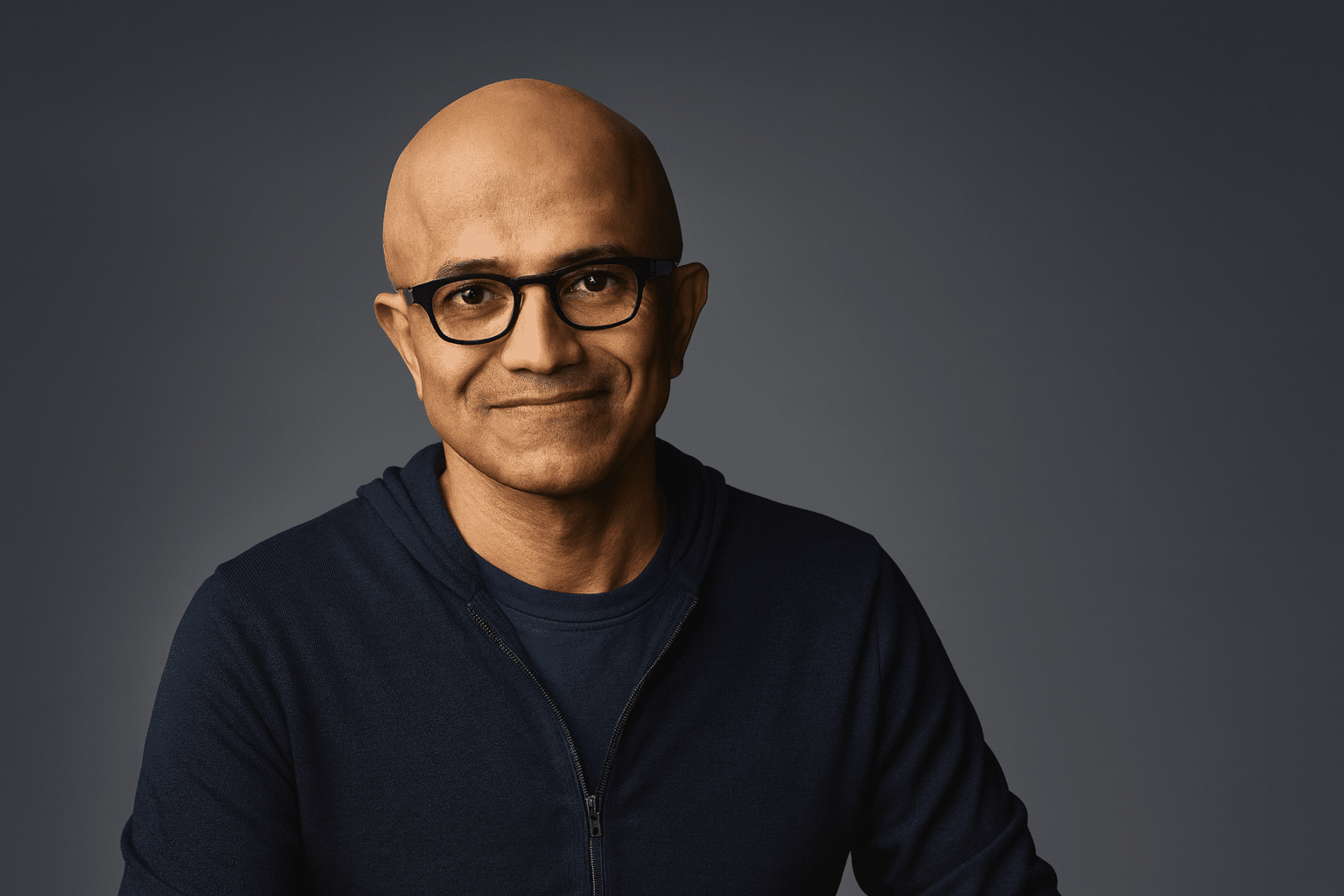
In this interview, Satya Nadella discusses Microsoft’s transformation into a cloud-and-AI leader and why artificial intelligence represents the next major computing platform shift. He shares insights on long-term investing, responsible AI development, organizational culture, and balancing innovation with trust. The conversation highlights platform strategy, continuous learning, enterprise transformation, and how empathy, curiosity, and inclusion help organizations adapt and thrive through periods of technological change.
Satya Nadella is the Chairman and CEO of Microsoft, one of the world's largest technology companies. Since becoming CEO in 2014, he has led Microsoft's transformation into a cloud and AI powerhouse through the growth of Azure, strategic investments in artificial intelligence, and a renewed focus on innovation and openness. Nadella is widely recognized for fostering a culture of continuous learning, championing responsible technology, and driving long-term growth through customer-centric leadership and platform innovation.
December 5, 2025
We are not betting only on future dreams. We already have large, growing businesses that give us permission to invest. Azure today is bigger than all of Microsoft was ten years ago. We also already see AI revenue at scale. So we invest against real demand, not just hope that something might show up later.
We are building a fungible AI fleet. The same infrastructure can handle training, inference, and data generation, across many regions. On top of that, we have a broad product portfolio: Copilot for consumers, Microsoft 365 Copilot, GitHub Copilot, healthcare, security, and third-party use. That mix makes the asset useful for a long time and supports solid returns.
History shows productivity comes after broad use, not at launch. PCs showed up in GDP only after workplaces changed processes around them. It will be the same with AI. You cannot just try a tool once and expect magic. Real gains come when people use AI deeply and redesign how they forecast, write, code, and make decisions.
I think work will become macro delegation and micro steering. People give AI a high-level goal and then guide the details. Developers already do this with GitHub Copilot. Doctors, security analysts, and knowledge workers will also get higher levels of abstraction, so they can focus on real judgment and outcomes while AI handles much of the drudgery.
I began in assembly language, then moved to higher-level languages, and later to tools that could generate code. Each step raised the abstraction. With AI, that continues. I still think and design, but an AI agent helps me bootstrap into new frameworks and explore options faster. It reminds me that learning new tools is key to staying relevant.
The weekend was intense, but I did not see it as a bad bet. Microsoft has a long history of partnering. We backed OpenAI as a research lab and were comfortable with that. I told everyone we would keep partnering with OpenAI, and also with Sam, inside or outside the lab. It ended well for all sides.
The partnership helped create one of the most valuable private companies and one of the most important nonprofits. Microsoft is now linked to both, which I am proud of. For me, it shows that bold but well-structured partnerships can change the direction of a large company, if you stay consistent and think in long time frames.
I respect ChatGPT’s success. Hundreds of millions use it daily. In consumer space, we compete hard but know Google and OpenAI have strong distribution. Our unique focus is enterprise. Microsoft 365 Copilot unites web knowledge with a company’s own work data. That is where we can be truly different and deliver real productivity gains.
I try to stay in the middle of the road. It is good to be clear-eyed about unintended consequences. At the same time, I stay optimistic that technology can improve work and life. The key is to treat safety and downside risks as engineering priorities that we work on every day, not problems we plan to clean up later.
We built structures like the joint digital safety board with OpenAI. Its job is not theory. It is to apply safety reviews to every product launch. We test for prompt injection, misuse, and cyber risks. Attackers will use these tools, so we must raise our defenses in parallel. Safety is part of the engineering, not an afterthought.
Our license to operate comes from creating local surplus. In each country we ask if we help small businesses, mid-sized firms, public sector, and big companies become more competitive. If our cloud, AI, and capital do not translate into local progress, we do not deserve that license. That thinking guides where and how we invest.
When you hear Germany, you think engineering. Mid-sized companies and large brands like Siemens and Mercedes-Benz already blend physical engineering with digital and AI. We bring cloud and AI factories, and they add unique value and export it to the world. That loop, where each side plays its strengths, can be very powerful for growth.
I do not see diversity and meritocracy as opposites. Real meritocracy means you are not overlooking talent, wherever it comes from. I am a product of American technology reaching me in India and then fair immigration policies. My job now is to help build teams where people feel they belong and can fully contribute their skills.
I was lucky twice. First, to get access to American tech while growing up in India. Second, to be allowed to come work in this industry. That creates a sense of gratitude and responsibility. It makes me value inclusion, listening, and giving others real opportunity, because someone once did that for me at key moments.
This is why we invest in things like the EU data boundary, German sovereign cloud, and sovereign services on the public cloud. Customers need control and continuity even as laws differ. Every country and company also faces other countries’ laws when they operate abroad. Over time, norms will form, and we design with that reality in mind.
Zain taught me that technology must include everyone. In the past, accessibility was an add-on. Now multimodal models make inclusion more natural, because you can move between text, voice, image, and more. I hope this AI wave is remembered for making computing a real force for universal inclusion. That would be a fitting way to honor him.
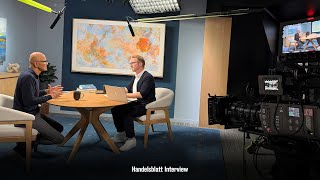
Use this interview in your research, article, or academic work
Chief Revenue Officer, Nebius at Nebius
In this interview, Marc Boroditsky discusses Nebius’ strategy for becoming a leading AI infrastructure platform in a rapidly evolving market. He shares insights on serving…

Co-Founder at Y Combinator
In this interview, Y Combinator co-founder Paul Graham reflects on twenty-one years of startup acceleration and forty-seven YC batches. Graham explores the nature of founder…

Founder & CEO at Food for Education
In this interview, Food for Education founder and CEO Wawira Njiru reflects on her foundational upbringing, family values, and the journey of building Africa's largest…

President & CEO at Sasol
In this interview, Sasol president and CEO Simon Baloyi discusses the operational turnaround of the global integrated chemicals and energy company. Baloyi details cross-functional collaboration…

Founder & CEO at Liquid
In this interview, Liquid founder and CEO Franklin Wang discusses the integration of conversational AI with cryptocurrency perpetual futures trading. Wang details how the Co-Invest…
Co-Founder, Chairman & CIO at Marshall Wace
In this interview, Marshall Wace co-founder and chairman Sir Paul Marshall discusses running a ninety billion USD alternative asset management firm. Marshall explains the synergy…