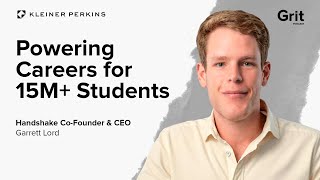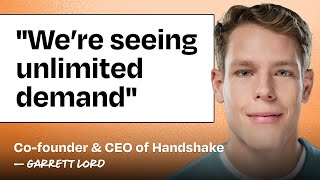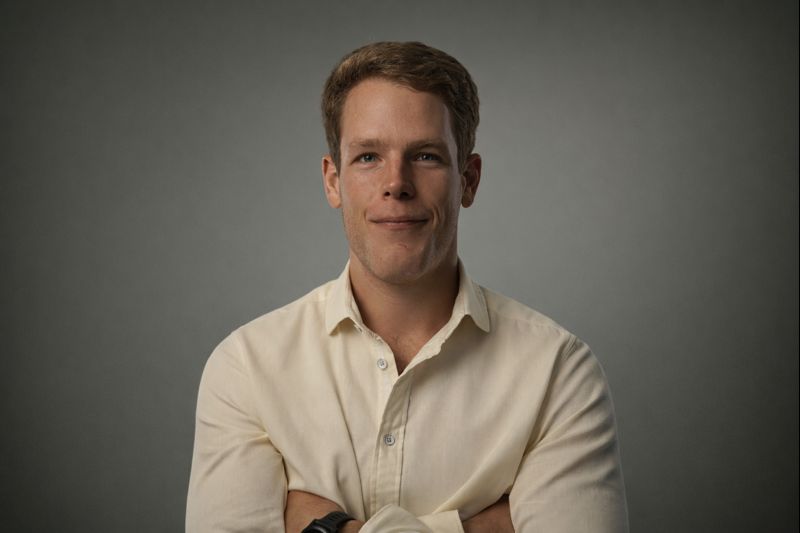
Garrett LordCo-founder & CEO, Handshake
Garrett Lord is the co-founder and CEO of Handshake, a career network powering millions of students and employers. He shares lessons on resilience, hiring, culture, scaling leadership, and building with Olympic-level standards.
Founder Stats
- SaaS, Education, Technology, AI
- Started 2014
- $1M+/mo
- 50+ team
- USA
About Garrett Lord
Garrett Lord is the co-founder and CEO of Handshake, a leading career platform connecting students, professionals, and employers. In this interview, he reflects on his journey from a working-class background to building a category-defining company, sharing practical insights on resilience, culture, leadership growth, hiring, and what it takes to scale with conviction in the age of AI.
Interview
December 25, 2025
What motivated you to start Handshake?

Handshake began as a personal mission. I lacked access to career information growing up, while others knew how recruiting worked. After interning at Palantir, I saw the gap clearly. I wanted to build something that helped students find great jobs regardless of background, school, or family connections.
How did your upbringing shape your approach as a founder?

Adversity became normal for me early in life. It taught me how to deal with uncertainty and ambiguity. My dad always said I might not know as much as others, but I could outwork them. That mindset still drives how I approach challenges and long-term effort.
How difficult was it to get your first major internship?

It was very hard. I didn’t attend a well-known school, so I had to cold email recruiters and push for attention. I prepared intensely and flew to interviews on my own. That experience showed me how uneven access to opportunity really is.
What were the earliest days of Handshake like?

The early years were a slog. Hundreds of universities said no. We lived out of a Ford Focus, drove across states, and slept in parking lots. There was constant fear of failure, but we kept stacking small wins and supporting each other as founders.
How did you stay motivated during difficult periods?

I focused on stacking days. Some days I performed at my best, other days I didn’t. But consistency mattered more than perfection. Over time, effort compounds, and looking back after years, the progress can be overwhelming in a good way.
What advice do you have about founder resilience?

Fear and uncertainty never fully disappear. You just learn how to live with them. Founders have to stay optimistic and keep moving forward even when outcomes are unclear. That belief in the future is what allows you to push through long stretches of difficulty.
What would you have done differently earlier on?

I would have invested earlier in talent density and talent brand. The first twenty-five people shape everything that follows. Hiring exceptional people early creates momentum and resilience during periods of rapid growth.
How has your role changed as Handshake scaled?

Early on, you manage everything directly. At scale, you must focus on what the business needs most. I had to learn sales, fundraising, recruiting, and leadership skills that didn’t come naturally but were required for the company’s next phase.
How do you think about executive leadership?

Great executives balance long-term strategy with short-term execution. They make trade-offs, hire well, and drive outcomes. I trust my leadership team deeply and believe the company could run well even if I were temporarily unavailable.
What does scaling yourself through others mean to you?

You have to decide what must remain uniquely yours and what others can own. Letting go is hard, but it multiplies impact. Founders should stay curious and engaged while empowering experts to lead key parts of the business.
How do you avoid micromanaging as a CEO?

I prefer being micro-interested rather than micromanaging. You can care deeply, ask questions, and stay involved without removing ownership. At the same time, founders must recognize how much weight their words carry.
How did Handshake AI originate?

AI labs began asking for access to experts in our network. We realized existing workflows were broken. We built Handshake AI to deliver high-quality human data at speed and scale, creating a company within a company with its own culture.
Why has Handshake AI grown so quickly?

Most AI gains today come from post-training data. Labs need quality, speed, and volume. Our access to professionals and structured workflows allowed us to meet that demand quickly and reliably.
How does Handshake AI benefit individuals?

Participants earn flexible income and learn frontier AI skills like reasoning evaluation and prompt design. Many add this experience to their resumes, improving employability while directly contributing to shaping advanced AI systems.
How do you think about company culture?

Culture is defined by hard decisions, not slogans. Founders must clearly communicate what is acceptable and what isn’t. Being transparent helps people self-select, which is critical during fast growth.
What does Olympic pace mean at Handshake?

Olympic pace means Olympic-level passion and standards, not working nonstop. Excellence requires intensity and commitment over time. That expectation isn’t for everyone, and that’s okay. Culture should filter for alignment.
If you rebuilt Handshake today, what would you do first?

I would go big immediately. AI is reshaping the economy, and playing it safe means getting passed. With conviction, great people, consistent effort, and some luck, founders can build massive outcomes right now.
Table Of Questions
Video Interviews with Garrett Lord
First Block: Interview with Garrett Lord, Co-Founder and CEO of Handshake
Related Interviews

Mark Shapiro
President and CEO at Toronto Blue Jays
How I'm building a sustainable winning culture in Major League Baseball through people-first leadership and data-driven decision making.

Harry Halpin
CEO and Co-founder at Nym Technologies
How I'm building privacy technology that protects users from surveillance while making it accessible to everyone, not just tech experts.

Morgan DeBaun
Founder at Blavity
How I built a digital media powerhouse focused on Black culture and created a platform that amplifies diverse voices.