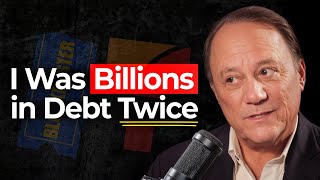
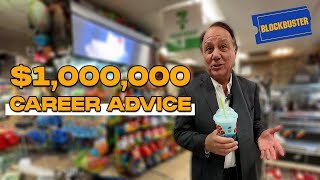
This conversation features Jim Keyes, who shares lessons from leading two iconic companies through major transformations and financial crises. He explains why debt—not Netflix—ultimately caused Blockbuster's downfall, reflects on growing up in poverty, discusses innovation at 7-Eleven, and shares his philosophy on learning, resilience, leadership, and overcoming fear. The discussion also covers entrepreneurship, franchising, AI, education, social media, and personal growth.
Jim Keyes is a business executive, entrepreneur, author, and former CEO of both 7-Eleven and Blockbuster. Rising from a difficult childhood and humble beginnings, he worked his way through college, earned an MBA from Columbia Business School, and eventually led two globally recognized brands. He is widely known for his focus on continuous learning, innovation, leadership, and personal development.
May 1, 2024
The opportunity to work with well-known companies that were facing challenges really attracted me. I enjoy the intellectual stimulation and the unlimited potential for transformation. Both 7-Eleven and Blockbuster were in need of fresh leadership, and I was drawn to help them navigate through difficult times and come out stronger.
I would still choose 7-Eleven because I know the system inside and out, and it's a profitable model if you're a successful franchisee. But there are other good options like Subway. There are also many opportunities for people who want to be entrepreneurs and start their own businesses from scratch.
Franchising is an easier path to entrepreneurship because everything is laid out for you. The systems, the inventory, the accounting – all of that is handled. It can be a great way to learn how to run a business, but I personally lean toward starting something new because it offers more freedom and the potential for greater rewards.
7-Eleven started in 1927 as Southland Ice Company, selling blocks of ice to keep people's iceboxes cold. But with the invention of refrigeration, they saw that their core business was no longer needed. So, they started selling bread, milk, and other goods instead, which led them to become a convenience store.
The introduction of refrigerators made the ice business obsolete. They realized that people weren't coming to the store just for ice – they were coming for the convenience of having other products available. This insight helped them shift to the convenience store model, selling essentials like bread and milk.


Use this interview in your research, article, or academic work

Co-Founder at Y Combinator
In this interview, Y Combinator co-founder Paul Graham reflects on twenty-one years of startup acceleration and forty-seven YC batches. Graham explores the nature of founder…

Founder & CEO at Food for Education
In this interview, Food for Education founder and CEO Wawira Njiru reflects on her foundational upbringing, family values, and the journey of building Africa's largest…

President & CEO at Sasol
In this interview, Sasol president and CEO Simon Baloyi discusses the operational turnaround of the global integrated chemicals and energy company. Baloyi details cross-functional collaboration…

Founder & CEO at Liquid
In this interview, Liquid founder and CEO Franklin Wang discusses the integration of conversational AI with cryptocurrency perpetual futures trading. Wang details how the Co-Invest…
Co-Founder, Chairman & CIO at Marshall Wace
In this interview, Marshall Wace co-founder and chairman Sir Paul Marshall discusses running a ninety billion USD alternative asset management firm. Marshall explains the synergy…
Co-Founder & CEO at Ather Energy
In this interview, Ather Energy co-founder and CEO Tarun Mehta discusses the evolution of India's electric two-wheeler market and the unveiling of the EL platform…