

Asparuh KoevPresident & CEO
In this interview, Transmetrics CEO Asparuh Koev discusses the practical realities of AI in logistics and trucking. He explains where AI delivers measurable value today, why human oversight remains essential, and how companies can use AI to improve efficiency, profitability, and driver experience without sacrificing accountability.

Founder Stats
- AI
- Started 2013
- $1M+/mo
- 50–100 team
- Sofia, Bulgaria
About Asparuh Koev
Asparuh Koev is the President and CEO of Transmetrics, an AI-powered logistics optimization company helping transportation businesses improve planning, forecasting, and operational efficiency. With extensive experience in artificial intelligence and supply chain technology, he focuses on applying AI to real-world logistics challenges while ensuring human oversight remains central to decision-making.
Interview
June 23, 2026
Why do you say AI still struggles to pass the dispatch desk test?
Logistics is a highly unpredictable environment. Data quality is often poor, information changes constantly, and unexpected events happen every day. Unlike software development, where AI operates in a controlled environment, logistics requires handling ambiguity and exceptions that AI still struggles to manage reliably.
Why is logistics more difficult for AI than software development?
When AI writes code, it has access to complete information and immediate feedback. In logistics, information is often incomplete, inaccurate, or outdated. A freight listing may no longer be available, a shipment may change unexpectedly, or operational conditions may shift rapidly, making decisions much more complex.
What is the biggest mistake companies make when adopting AI?
Where is AI creating the most value in trucking today?
AI is particularly valuable at identifying opportunities and exceptions that humans might miss. It can analyze thousands of freight opportunities, evaluate route options, monitor operational data, and highlight the most relevant information, allowing employees to focus their attention more effectively.
How can fleets use AI for better decision-making?
Why do you believe humans should remain in the loop?
What role can AI play in fleet safety?
How should companies evaluate the ROI of AI investments?
Why do commercial processes offer strong opportunities for AI?
What concerns you about AI governance in logistics?
How can AI affect drivers' daily lives?
What does responsible AI adoption look like?
Can AI help solve industry-wide challenges such as driver shortages?
Table Of Questions
Video Interviews with Asparuh Koev
Why AI in Trucking Still Needs a Human at the Dispatch Desk
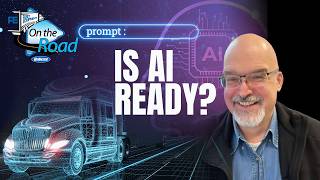
Why AI in Trucking Still Needs a Human at the Dispatch Desk
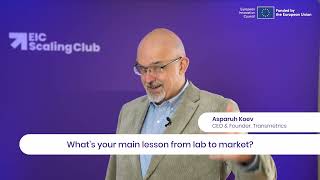
AI Transforming Logistics | Asparuh Koev from Transmetrics at the EIC Growth Forum
Cite This Interview
Use this interview in your research, article, or academic work
Related Interviews

Naveen Rao
VP of Generative AI & Former CEO of MosaicML at Databricks
In this interview, Naveen Rao, VP of Generative AI at Databricks and former CEO of MosaicML, analyzes the explosive economics of artificial intelligence inference and…

Sam Altman
Co-founder & CEO at OpenAI
In this interview, Sam Altman, Co-Founder and CEO of OpenAI, explores the practical trajectory toward artificial general intelligence and the imperative of human agency in…

Jensen Huang
Co-founder & CEO at NVIDIA
In this interview, Jensen Huang, Founder, President and CEO of NVIDIA, addresses prevailing existential narratives surrounding artificial intelligence and outlines Europe's sovereign computing opportunities. He…

Mo Gharbat
Founder & CEO at Open
In this interview, Mo Gharbat, Founder and CEO of Open, discusses building an enterprise artificial intelligence customer communication platform that replaces legacy support systems. He…
Sam Altman
Co-founder & CEO at OpenAI
In this interview, Sam Altman discusses the accelerating pace of artificial intelligence, the realities of preparing OpenAI for a public offering while preserving its nonprofit…

Sravanth Aluru
Co-Founder & CEO at Avataar
In this interview, Sravanth Aluru breaks down the architectural shift toward AI-native enterprises, arguing that organizations must deploy a central intelligence layer rather than relying…