

Jensen HuangCo-founder & CEO
In this interview, Jensen Huang, Founder, President and CEO of NVIDIA, addresses prevailing existential narratives surrounding artificial intelligence and outlines Europe's sovereign computing opportunities. He explains accelerated computing economics, regional semiconductor capacity, and enterprise data center modernization. Huang delivers decisive perspectives on AI safety governance, open ecosystem collaboration, and why physical industries will unlock the next multi-trillion-dollar economic transformation.

Founder Stats
- AI
- Started 1993
- Approx. 18 Billion USD/mo
- 50000+ team
- Santa Clara, California, USA
About Jensen Huang
Jensen Huang is Founder, President and CEO of NVIDIA, the global pioneer in accelerated computing and artificial intelligence infrastructure. He earned an undergraduate degree in electrical engineering from Oregon State University and a master's degree from Stanford University. Under his vision, NVIDIA transformed from a 3D graphics specialist into the preeminent technology architecture powering modern generative AI and enterprise data centers.
Interview
October 20, 2026
This is interview 4 of 4 with Jensen Huang.
Jensen Huang has been featured on CEO Insider 4 times. Explore the full collection.
Why do you disagree with catastrophic existential narratives warning that AI will destroy humanity?
Existential panic fundamentally misinterprets engineering realities and distracts from tangible, solvable deployment challenges. If someone genuinely believed their software would eradicate civilization, continuing to develop it would be irrational; we build technology to augment human productivity and cure human suffering.
How can European nations achieve technological sovereignty in artificial intelligence using American silicon?
Sovereign computing does not require fabricating every single physical transistor domestically from day one. By deploying high-performance computing clusters locally, nations can train customized models on their native languages, national heritage data, and cultural nuances while ensuring local data governance.
What fundamental economic shift distinguishes accelerated computing from traditional general-purpose CPUs?
Moore's Law has ended for conventional CPUs, causing computing costs and power consumption to scale unsustainably with data growth. Accelerated computing offloads parallel mathematical workloads to specialized GPUs, slashing energy consumption by orders of magnitude while accelerating processing throughput.
How do you respond to enterprise leaders worried about excessive energy demands of frontier AI clusters?
What role does open-source foundation modeling play alongside proprietary frontier computing platforms?
How does NVIDIA manage global supply chain constraints amid unprecedented demand for AI accelerators?
Why do you emphasize that physical industries represent the next explosive frontier for generative AI?
How does NVIDIA software like CUDA and AI Enterprise create enduring commercial defensibility?
What governance frameworks are most appropriate for ensuring responsible AI deployment across society?
We must regulate specific operational applications, safety outcomes, and human impacts rather than trying to stifle the mathematical algorithms themselves. Regulating medical devices, automated transportation, and financial systems ensures rigorous public safety without choking fundamental scientific progress.
How do you sustain a culture of extreme speed and flat organizational agility inside a trillion-dollar company?
What is your perspective on regional data center expansion and sovereign AI infrastructure funding?
How does the advent of autonomous AI agents shift data center infrastructure design?
What advice do you offer political leaders seeking to build competitive domestic tech ecosystems?
What core personal principle has sustained your leadership of NVIDIA across three decades?
Table Of Questions
Video Interviews with Jensen Huang
Can Europe Build Their Own AI Tech With American Chips? Jensen Huang Believes So | Fortune AI Weekly

Can Europe Build Their Own AI Tech With American Chips? Jensen Huang Believes So | Fortune AI Weekly
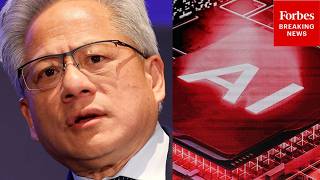
FULL INTERVIEW: CNN's Anderson Cooper Presses NVIDIA CEO Jensen Huang
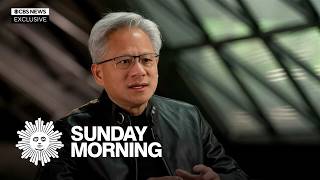
Extended interview: Nvidia CEO explains why he disagrees with AI warnings
Cite This Interview
Use this interview in your research, article, or academic work
Related Interviews

Naveen Rao
VP of Generative AI & Former CEO of MosaicML at Databricks
In this interview, Naveen Rao, VP of Generative AI at Databricks and former CEO of MosaicML, analyzes the explosive economics of artificial intelligence inference and…

Sam Altman
Co-founder & CEO at OpenAI
In this interview, Sam Altman, Co-Founder and CEO of OpenAI, explores the practical trajectory toward artificial general intelligence and the imperative of human agency in…

Mo Gharbat
Founder & CEO at Open
In this interview, Mo Gharbat, Founder and CEO of Open, discusses building an enterprise artificial intelligence customer communication platform that replaces legacy support systems. He…
Sam Altman
Co-founder & CEO at OpenAI
In this interview, Sam Altman discusses the accelerating pace of artificial intelligence, the realities of preparing OpenAI for a public offering while preserving its nonprofit…

Sravanth Aluru
Co-Founder & CEO at Avataar
In this interview, Sravanth Aluru breaks down the architectural shift toward AI-native enterprises, arguing that organizations must deploy a central intelligence layer rather than relying…
Jensen Huang
Co-founder & CEO at NVIDIA
In this interview, Jensen Huang, co-founder and CEO of NVIDIA, sits down with Anderson Cooper to address the most urgent questions surrounding AI safety, autonomous…