
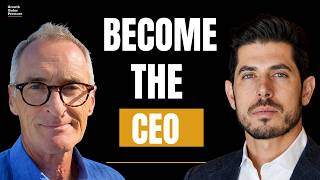
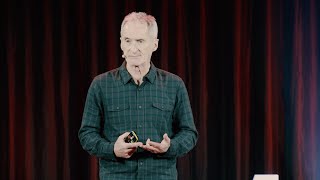
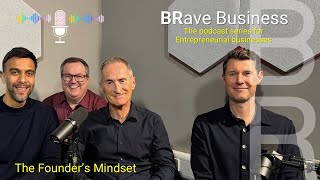
In this interview, Founders Legacy founder and leadership coach Simon Court discusses executive development, founder psychology, and scaling high-growth enterprises. Court explains the Three Horizons strategic framework, details how he guided Miniclip through its crucial mobile gaming pivot to unicorn status, and highlights why effective hiring and genuine humility are foundational to enduring corporate leadership. He also shares insights on overcoming executive blindspots and managing burnout.
Simon Court is the founder of Founders Legacy and a veteran leadership coach with more than twenty-five years of executive development experience across Europe. Court has guided numerous founders and corporate executives through hyper-growth scaling, including guiding Miniclip and Tipico to unicorn outcomes. Through Founders Legacy, he distills fifty game-changing leadership lessons to help entrepreneurs build resilient, enduring organizations.
September 02, 2026
Coaching is designed to make a leader more effective, impactful, and self-aware while building a sustainable business that withstands competitive pressures. Effective coaching is neither aggressive sports yelling nor passive therapy. It provides a balanced combination of empathetic personal support and rigorous challenge, bringing experienced perspectives into the dialogue to stimulate genuine personal and organizational change.
In my experience, managers and founders primarily fear two things: losing control and losing face. Anxieties around committing to ambitious goals often stem from the fear of looking foolish if those targets are missed. Overcoming these deep-seated fears allows leaders to step into vulnerability, acknowledge what they do not know, and unlock exceptional personal performance.
When a founder struggles with scale, they have three distinct pathways. First, they can hand executive leadership over to a professional CEO, though this carries cultural alignment risks. Second, they can narrow their focus to their core strength, such as product vision, and hire an experienced chief operating officer for operational execution. Third, the founder can commit to mastering the chief executive role through structured coaching and team building.
When mobile gaming began disrupting browser platforms, Miniclip faced flatlining revenues and needed an urgent strategic transformation. We focused on three foundational pillars: developing the founder into a professional chief executive, rebuilding the senior leadership team with specialized mobile gaming operators, and executing an intensely focused mobile transition strategy that culminated in a multi-billion-dollar valuation outcome.
Transitioning legacy early-stage employees requires deep empathy, transparent communication, and genuine care. By handling departures respectfully and recognizing early contributions rather than treating terminations transactionally, the company preserved personal friendships with early team members while successfully upgrading organizational capabilities for global scale.
The Three Horizons framework outlines how three versions of the future coexist in the present. Horizon One represents the current operational business model that consumes most daily energy. Horizon Two focuses on entrepreneurial experiments and bridge pilots to test emerging models cheaply. Horizon Three represents long-term strategic reinvention. Great leadership requires shifting gears fluidly across all three horizons.
Amazon succeeds because its leadership never abandons continuous experimentation at the frontier of its operations. While managing massive core logistical and cloud businesses in Horizon One, they relentlessly launch low-cost Horizon Two experiments. Cultivating this experimental mindset inside large corporate structures prevents organizational stagnation and disruption.
When CEOs map their actual daily diary against their top strategic business priorities, they frequently discover that less than fifteen percent of their working time is spent on their most critical growth initiatives. Identifying this mismatch forces executives to redesign their priorities, delegate operational tasks, and align daily activities with core goals.
Unstructured interviews are among the weakest predictive tools for assessing real performance because candidates can rehearse polished narratives. Recruitment must incorporate practical work sample tests, such as having a consultant deliver an actual client pitch, to directly observe real-world capabilities and behavioral competencies.
Google’s hiring research demonstrated that limiting interview panels to four evaluators maximizes decision quality, as additional interviews yield diminishing returns. Organizations should combine four structured interviewers with behavioral work tests and objective psychological assessments to evaluate cultural fit and capability scientifically.
To protect authentic Puglian cultural identity against homogenized hotel chains, Borgo Egnazia modeled the exact behaviors required to preserve regional heritage across its properties. By implementing structured psychological profiling and behavioral assessments into their hiring pipeline, they recruited high-caliber staff aligned with the company's cultural values.
During the early growth phase of running a leadership practice, managing international travel, securing client pipelines, and servicing mortgage debt created immense stress and sleepless nights. Balancing business development with family commitments required intentionally redesigning our service model away from intensive multi-day travel workshops toward executive coaching.
An individual founder's personal hours are inherently unscalable, which means the only true mechanism for scaling impact is institutionalizing organizational culture. By establishing clear values, documented behavioral standards, and rigorous delegation, leaders empower their teams to deliver consistent outcomes without requiring direct founder intervention.
Fluid intelligence, which governs rapid processing and immediate problem-solving, peaks in an executive's twenties and thirties before gradually declining. In contrast, crystallized intelligence, representing accumulated knowledge, pattern recognition, and wisdom, expands over time, making seasoned leaders highly effective mentors, writers, and strategic advisers.
Humility allows leaders to remain completely undefended regarding their personal limitations and knowledge gaps. Humble executives listen actively, accept constructive feedback, and eagerly recruit individuals who possess superior expertise, transforming vulnerability into substantial organizational strength.
Rigid annual performance appraisals are outdated and ineffective because feedback arrives far too late to drive operational agility. Leaders should treat the business year as fifty-two short weekly sprints, maintaining continuous, informal developmental conversations with team members to resolve operational bottlenecks immediately.
Use this interview in your research, article, or academic work

Founder & CEO at Food for Education
In this interview, Food for Education founder and CEO Wawira Njiru reflects on her foundational upbringing, family values, and the journey of building Africa's largest…

Founder & CEO at MyNewTerm
In this interview, MyNewTerm founder and CEO Wayne Cartmel discusses the challenges of building a bootstrapped applicant tracking system and job board for the education…

Co-Founder at Y Combinator
In this interview, Y Combinator co-founder Paul Graham reflects on twenty-one years of startup acceleration and forty-seven YC batches. Graham explores the nature of founder…

President & CEO at Sasol
In this interview, Sasol president and CEO Simon Baloyi discusses the operational turnaround of the global integrated chemicals and energy company. Baloyi details cross-functional collaboration…

Founder & CEO at Liquid
In this interview, Liquid founder and CEO Franklin Wang discusses the integration of conversational AI with cryptocurrency perpetual futures trading. Wang details how the Co-Invest…
Co-Founder, Chairman & CIO at Marshall Wace
In this interview, Marshall Wace co-founder and chairman Sir Paul Marshall discusses running a ninety billion USD alternative asset management firm. Marshall explains the synergy…