

Nick DobosCo-Founder & CEO
In this interview, Nick Dobos, Co-Founder and CEO of Orgo and creator of Bops, breaks down the operational blueprint for running high-margin autonomous artificial intelligence businesses as a solo builder. He details vibe coding full-stack platforms during rapid thirty-six-hour sprints, packaging custom Grok bots for niche local enterprises, and securing recurring monthly retainer agreements. Dobos reveals practical strategies for overcoming client skepticism, automating customer research, and scaling lean software operations without employees.


Founder Stats
- AI
- Started 2024
- $10K–$50K/mo
- 1–5 employees
- San Francisco, California, USA
About Nick Dobos
Nick Dobos is the Co-Founder and CEO of Orgo, an artificial intelligence company pioneering personal computer-use agents, and the creator of Bops, an autonomous multi-screen agent architecture. A prominent software engineer and solo builder in the frontier AI ecosystem, he previously engineered advanced tooling across tech startups. Dobos is recognized for demonstrating how solo founders can rapidly build and monetize enterprise-ready agent fleets using lightweight development workflows.
Interview
November 03, 2026
What is the foundational premise behind building and selling custom Grok bots to local businesses?
Most small and medium businesses are overwhelmed by artificial intelligence hype but have neither the technical expertise nor the time to configure complex software systems. By identifying a narrow, repetitive workflow—such as dispatching service technicians or managing lead inquiries—you can configure an autonomous Grok agent tailored to their exact operating procedures. You package it not as abstract software, but as a dedicated digital employee that solves an urgent bottleneck.
How do you structure the pricing and economic model for a solo AI agent venture?
The optimal commercial strategy combines an upfront implementation fee with a recurring subscription retainer. You charge an initial setup fee—typically twenty-five thousand dollars—to conduct custom workflow research, configure the system prompts, and integrate local databases. Thereafter, you charge an ongoing retainer of three thousand dollars per month for model maintenance, context updates, and guaranteed operational uptime.
What was your technical workflow for vibe coding the Bops agent platform in thirty-six hours?
I built the initial platform inside a single continuous chat session using an agentic coding environment. Rather than over-engineering modular microservices or writing exhaustive documentation upfront, I maintained context within one persistent thread. When the model encountered syntax errors or dependency conflicts, I fed the terminal outputs directly back into the prompt stream, allowing the model to correct its own code in real time until the prototype achieved functional stability.
Why do autonomous agents require dedicated virtual desktop environments rather than simple API integrations?
Traditional software automation relies on brittle webhooks and closed enterprise application programming interfaces that legacy businesses rarely expose. An agent operating inside a cloud-hosted virtual desktop with dedicated virtual screens, an email address, and a virtual telephone number can interact with software exactly like a human employee. It clicks buttons, navigates browser tabs, and logs into legacy portals without requiring custom back-end engineering.
How should solo founders approach niche selection when launching an artificial intelligence agency?
Never invent a hypothetical problem in isolation. Pick up your phone and call fifty business owners across your existing personal network—dentists, commercial contractors, real estate brokers, property managers. Ask them what specific administrative task consumes their highest-paid employees' time each week. If three or four business owners describe the identical painful manual process, you have discovered an immediate commercial opportunity.
What strategy enables a solo builder to secure their first enterprise paying customer with zero brand reputation?
Offer to build the prototype entirely for free in exchange for total access, an authentic video case study, and three warm client referrals upon successful completion. Delivering undeniable economic value upfront removes commercial risk for the client. Once you save that initial business thirty hours of manual labor per week, their public testimonial becomes your primary marketing asset for closing subsequent contracts.
Why do you advise against building generalized vertical SaaS platforms as a first step?
Building generic horizontal SaaS is an unforgiving trap for solo founders because you immediately face high customer acquisition costs, relentless feature requests, and intense commoditization. By offering a bespoke, high-touch agent implementation, you command premium service fees while gathering deep domain intelligence. Once you implement identical agent workflows for ten clients in the same niche, you can productize the underlying architecture into software.
How do you overcome enterprise client skepticism regarding hallucination and operational errors in frontier models?
You establish rigid deterministic constraints and human-in-the-loop escalation boundaries. An autonomous agent should never have unilateral authority to execute irreversible external actions, such as wiring capital or signing legal waivers. The agent drafts responses, verifies data against internal records, and queues recommendations for human staff to review. This safety architecture builds executive confidence while drastically reducing operational workload.
What architectural role does Orgo play in the broader autonomous agent technology stack?
Orgo provides the foundational virtualization layer that allows artificial intelligence models to control full computer environments safely. Rather than executing unpredictable scripts on a user's physical hardware, Orgo spins up secure, isolated cloud computers equipped with complete operating systems. Models can see screens, control mice, trigger keystrokes, and access desktop applications within an isolated sandbox.
How does a solo operator manage ongoing customer support across multiple enterprise deployments?
You automate your own operational monitoring using the identical agent tooling you sell to clients. We configure supervisory watchdog bots that monitor each client agent's health, verify API token consumption, and send push alerts if an inference call stalls. Because the systems self-heal and escalate exceptions automatically, a single engineer can comfortably monitor dozens of client installations without hiring a customer support team.
What differentiates frontier agent builders from conventional software developers in the modern AI paradigm?
Conventional developers spend months optimizing database schemas, writing unit tests, and designing user interfaces. Frontier agent builders operate more like creative directors and systems orchestrators. The scarce skillset is not writing manual syntax; it is prompt architecture, context window management, and understanding how to decompose a complex commercial objective into deterministic cognitive sub-tasks that models can execute reliably.
How do you ensure client stickiness and prevent businesses from canceling their monthly retainers?
You embed your agent directly into the daily operational heartbeat of the company. When an automated system manages appointment scheduling, client intake, and inventory synchronization flawlessly, turning it off would paralyze the business. Furthermore, as frontier model capabilities advance every quarter, you continuously upgrade their underlying intelligence layer, providing ongoing value that justifies the retainer.
What is the most significant psychological barrier preventing engineers from succeeding as solo entrepreneurs?
Engineers naturally suffer from perfectionism and fear of sales rejection. They prefer spending six months hiding behind a terminal polishing invisible code rather than spending one uncomfortable afternoon calling potential clients. The market does not reward pristine codebase architecture; it rewards the speed at which you solve a painful business problem. Embrace scrappiness, ship imperfect solutions, and sell before you polish.
What is your overarching vision for the future of solo-operated enterprises over the next decade?
We are entering the era of the billion-dollar one-person company. With autonomous agent fleets handling administrative execution, sales outreach, customer support, and code maintenance, solo founders can wield the organizational leverage previously reserved for Fortune 500 corporations. The future belongs to lean operators who orchestrate intelligent systems rather than manage large hierarchical human payrolls.
Table Of Questions
Video Interviews with Nick Dobos
The 1M+ USD Solo Grok Bot Business (Full Course)

The 1M+ USD Solo Grok Bot Business (Full Course)

The 1,000 USD/hour 1-person AI business
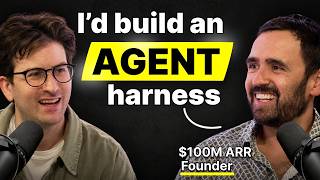
100M USD ARR Founder: The Next Big AI Opportunity
The 9 Stages of AI Agent Adoption, Explained
Cite This Interview
Use this interview in your research, article, or academic work
Related Interviews

Diogo Almeida
Co-Founder & CEO at TypeSafe AI
The reliability bottleneck in AI automation and why data matters more than compu
In this interview, Diogo Almeida, Co-Founder and Chief Executive Officer of TypeSafe AI, analyzes why intelligence reliability remains the defining bottleneck to software automation and…
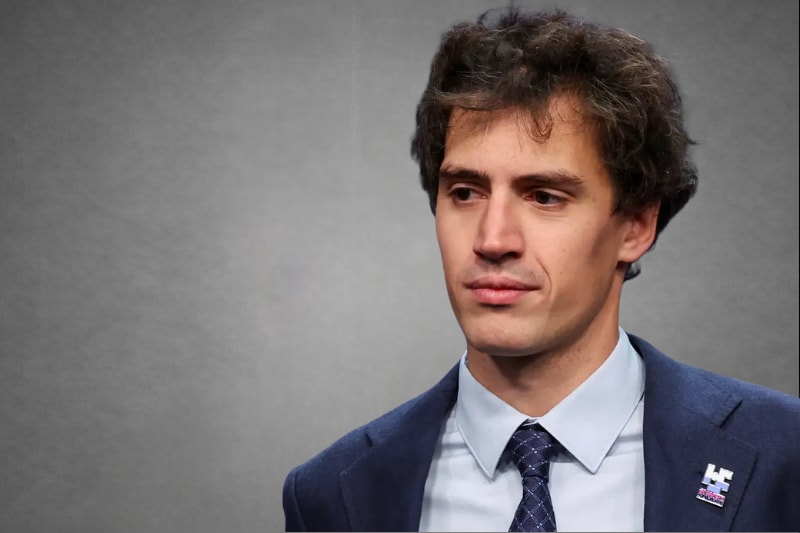
Arthur Mensch
Co-Founder & CEO at Mistral AI
Sovereign AI frontier models and enterprise compute economics
In this interview, Arthur Mensch, Co-Founder and Chief Executive Officer of Mistral AI, analyzes the geopolitical and economic dynamics driving the global artificial intelligence race.…
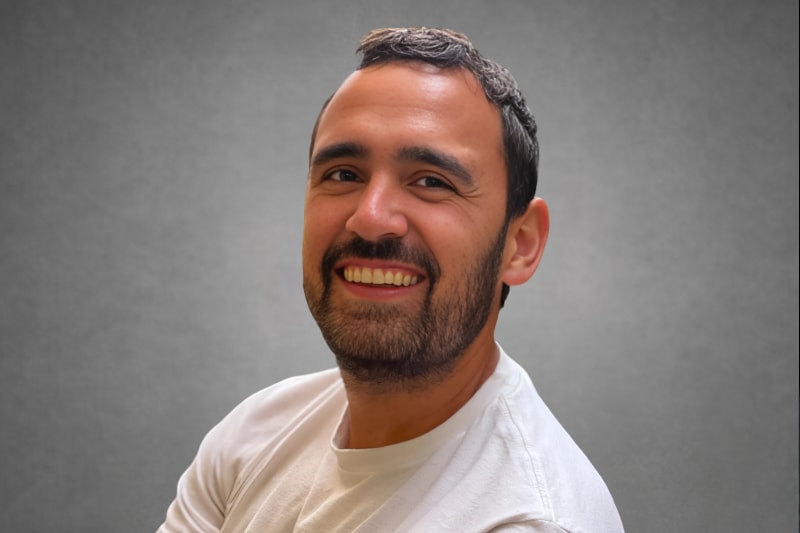
Jon Noronha
Co-Founder & Chief Product Officer at Gamma
In this interview, Jon Noronha, Co-Founder and Chief Product Officer of Gamma, breaks down the architectural mechanics of agent harnesses and how his team scaled…

Erik Bernhardsson
Founder & CEO at Modal
In this interview, Erik Bernhardsson, Founder and CEO of Modal, explores the rapidly evolving economics of frontier artificial intelligence inference and cloud computing infrastructure. He…

Demis Hassabis
Co-Founder & CEO at Google DeepMind
In this interview, Sir Demis Hassabis, Co-Founder and CEO of Google DeepMind and Nobel laureate in Chemistry, warns that societal institutions remain underprepared for the…

Dario Amodei
Co-Founder & CEO at Anthropic
Scaling laws, Constitutional AI and superintelligence
In this interview, Dario Amodei, Co-Founder and CEO of Anthropic, outlines the scientific trajectory toward superintelligent artificial intelligence and details the mechanics of Constitutional AI.…