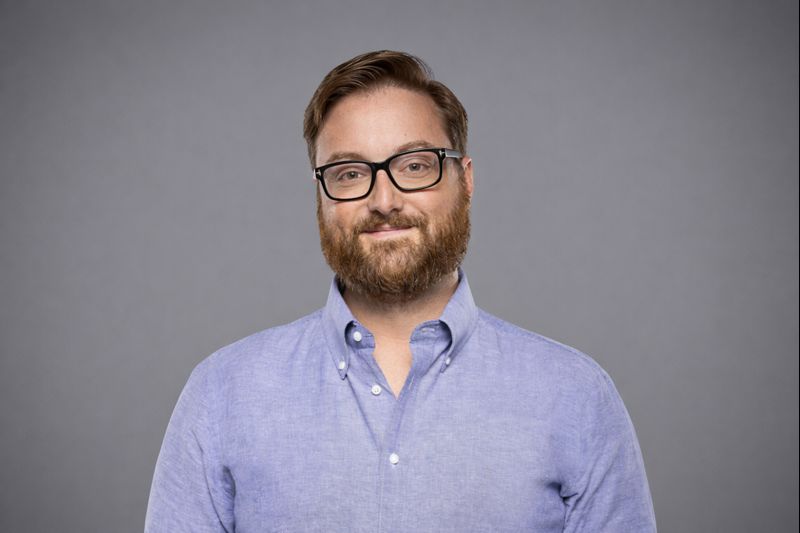
In this interview, Anduril Industries co-founder and CEO Brian Schimpf discusses the shift in modern warfare toward AI-powered, software-first defense technologies. Schimpf shares the origin story of Anduril alongside Palmer Luckey, details the challenges of hardware iteration compared to software, and analyzes the role of deterrence in regional conflicts. He also addresses ethical red lines in autonomous weaponry, details the impact of drone proliferation, and examines the consolidation of defense budgets.
Brian Schimpf is the co-founder and CEO of Anduril Industries, a defense technology company established in 2017. Before co-founding Anduril, Schimpf was an early employee and director of engineering at Palantir Technologies, managing international operations. He holds a Bachelor of Science in Operations Research and Industrial Engineering from Cornell University, where he directed autonomous vehicle projects. Under his leadership, Anduril has grown to become a primary contractor for United States and allied defense programs.
August 3, 2026
This is interview 2 of 2 with Brian Schimpf.
Brian Schimpf has been featured on CEO Insider 2 times. Explore the full collection.
My co-founders Matt Grimm, Trae Stephens, and I had worked together for a long time. Trae was at Founders Fund searching for a defense tech investment, but no one in Silicon Valley would touch defense. When Palmer Luckey left Facebook, we partnered to bring Silicon Valley engineering to the Pentagon.
We combine rapid software iteration with disciplined hardware engineering. Safety-critical systems controlling aircraft require rigorous, structured coding, but that does not mean the engineering cycle has to take ten years. Elon Musk proved you can execute high-quality engineering in months, not years.
It is a combination of technological change and political shifts. Many nations atrophied their defense capabilities by relying on American protection for decades. When the United States signaled a less interventionist posture, it created opportunities for aggressive neighbors to pursue their aims.
Militaries use long-range strike to target economic infrastructure, airfields, and supply lines rather than just military hardware. This creates severe political and economic pressure on adversaries. Fending off coordinated long-range strikes requires defending the entire country simultaneously, which is highly challenging.
The United States has deployed bounded autonomous systems like the Aegis combat system, torpedoes, and anti-radiation missiles since the 1970s. Bounding decision-making to a defined area or target profile is a proven defensive technique. The ethical choice is to build the most precise weapons possible.


Use this interview in your research, article, or academic work

Founder & CEO at Atoms
In this interview, Atoms founder and CEO Travis Kalanick shares his vision for automating the physical world through industrial robotics and AI. Kalanick reflects on…

Founder & CEO at Roblox
In this interview, Roblox co-founder and CEO David Baszucki discusses the platform's evolution into a major digital human co-experience platform. Baszucki outlines the value of…

President & CEO at Y Combinator
In this interview, Y Combinator President and CEO Garry Tan outlines the new paradigms of software development driven by vibe coding and AI agents. Tan…

Co-CEO at Netflix
In this interview, Netflix Co-CEO Ted Sarandos discusses the platform's ten-year journey in India and its global expansion strategy. Sarandos explains how Netflix matches content…

Interim CEO at Boston Dynamics
In this interview, Boston Dynamics interim CEO Amanda McMaster explains the commercial transition of the pioneer robotics firm from research laboratory to industrial deployer. McMaster…

Co-founder & CEO at Cerebras Systems
In this interview, Cerebras Systems co-founder and CEO Andrew Feldman details the engineering behind wafer-scale computing and the company's record-setting semiconductor IPO. Feldman explains why…